
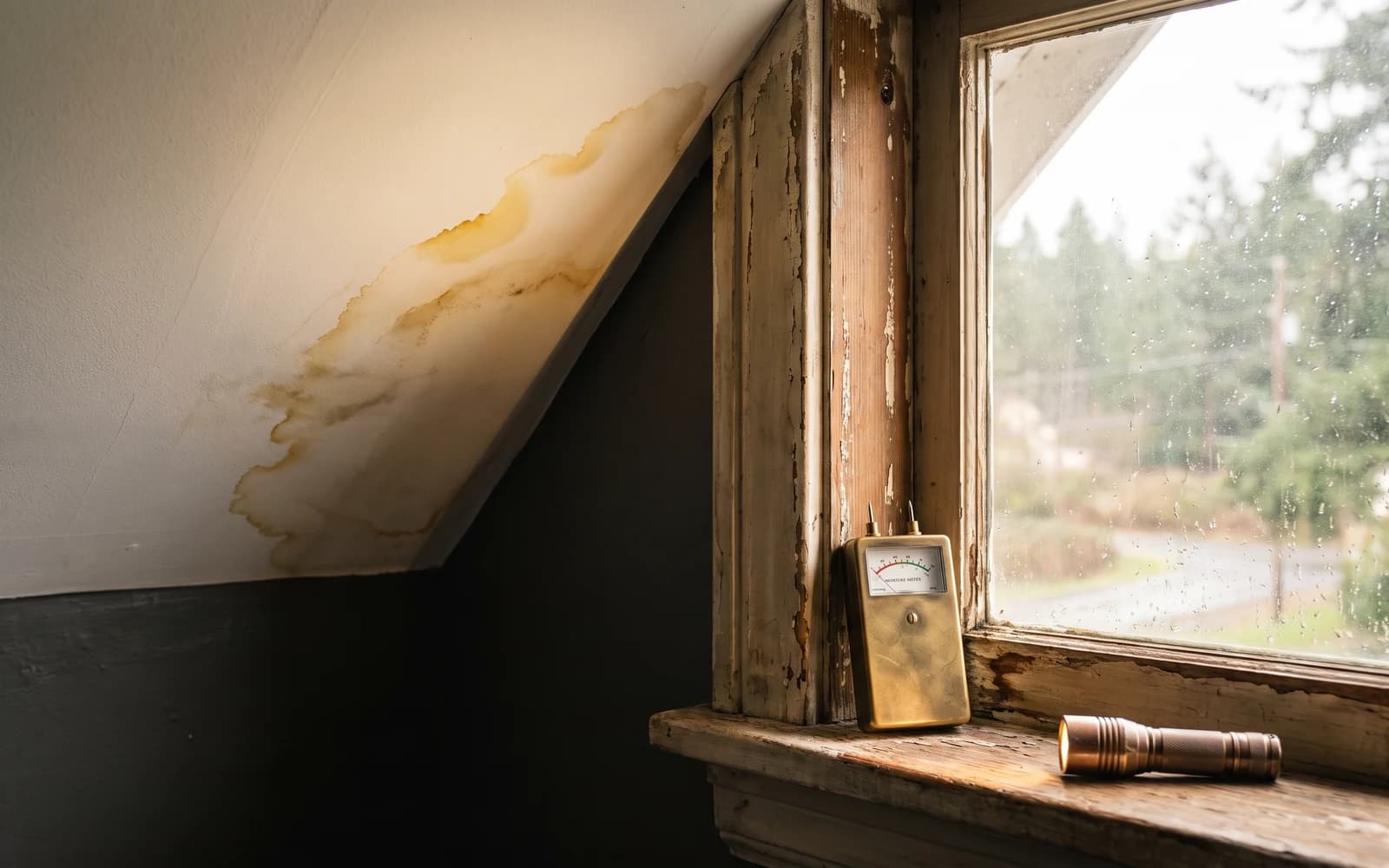
After enough Lower Mainland winters you learn that water damage here looks different than it does in a dry climate. We do not get many burst-pipe emergencies. What we get is persistent moisture: rain that finds a hairline gap, humidity that never fully clears, and a slow soak that quietly ruins drywall and framing before anything looks dramatic. The homes that stay dry are the ones where somebody caught the small signs early.
The visible signs most homeowners walk past
By the time water damage is obvious, it has usually been working away for a while. The early tells are easy to miss because they read as cosmetic. They are not, and none of them fix themselves.
- Yellow, brown, or dark rings on a wall or ceiling, often around a light fixture or in a corner
- Paint that bubbles, blisters, or peels away from the surface in a defined patch
- Drywall that feels soft, spongy, or slightly cool when you press a flat hand against it
- A musty or earthy smell that is strongest when a room has been shut up for a day
- Trim, baseboard, or window casing that is swelling, cupping, or lifting apart at the joints
Six hidden spots worth checking twice a year
The visible signs above are the ones water leaves after it has already spread. The spots below are where it starts, out of sight, and where a five-minute look with a flashlight pays for itself.
- Around window frames, where the drywall on the interior return deteriorates before the glass or the trim shows anything at all
- Inside the crawl space, which telegraphs trouble as a musty smell, sagging floors above, or air that simply feels heavy and damp
- Behind the siding, where compromised flashing or a tiny crack lets rain track in and run down inside the wall
- Under carpet and flooring, felt as a damp patch, a lumpy spot, or a soft give underfoot over the subfloor
- The base of exterior walls and the corners of below-grade rooms, where ground moisture wicks quietly upward
- The ceiling directly beneath a bathroom or a roof valley, where a slow leak pools before it finally stains through
What a handyman fixes, and what needs a specialist
Not all water damage is the same job. A lot of it is squarely handyman work once the area has dried out. Some of it is not, and pretending otherwise just wastes your money. Here is the honest split, because knowing which side of the line you are on saves you the most.
Work I take on
Once the moisture is gone and the surface is dry, most of the repair is routine. That means tracking down and sealing the source of a small leak, cutting out and patching the soft drywall as part of standard drywall repair, and re-caulking a failed seal around a tub, shower, or window, which I cover in detail in my guide to caulking tubs and showers. Correcting simple flashing and resealing exterior gaps so the rain stops finding its way in is the same category of work.
When to call a licensed trade or a restoration company
Some situations are past the point where a patch helps. Call a plumber or a restoration company, not a handyman, when you have an active plumbing leak that keeps returning after you dry the area, framing or subfloor that has gone soft and lost its strength, or mold spread across more than roughly a square metre. Large mold is a containment and health issue with its own protocols, and a licensed abatement crew is who handles it properly. My job then is to point you to the right trade first, then help put the room back together once the source is truly dealt with.
Catch it before the wet season does
Most of the water damage I see traces back to something that was visible months earlier and got ignored through a busy fall. A ten-minute walk through the house before the rain settles in catches the majority of it. My pre-winter checklist covers the exterior-sealing side of that walk, and if the same cracks keep reopening in your walls after every repair, that pattern can be its own signal worth reading about in why drywall cracks keep coming back.