
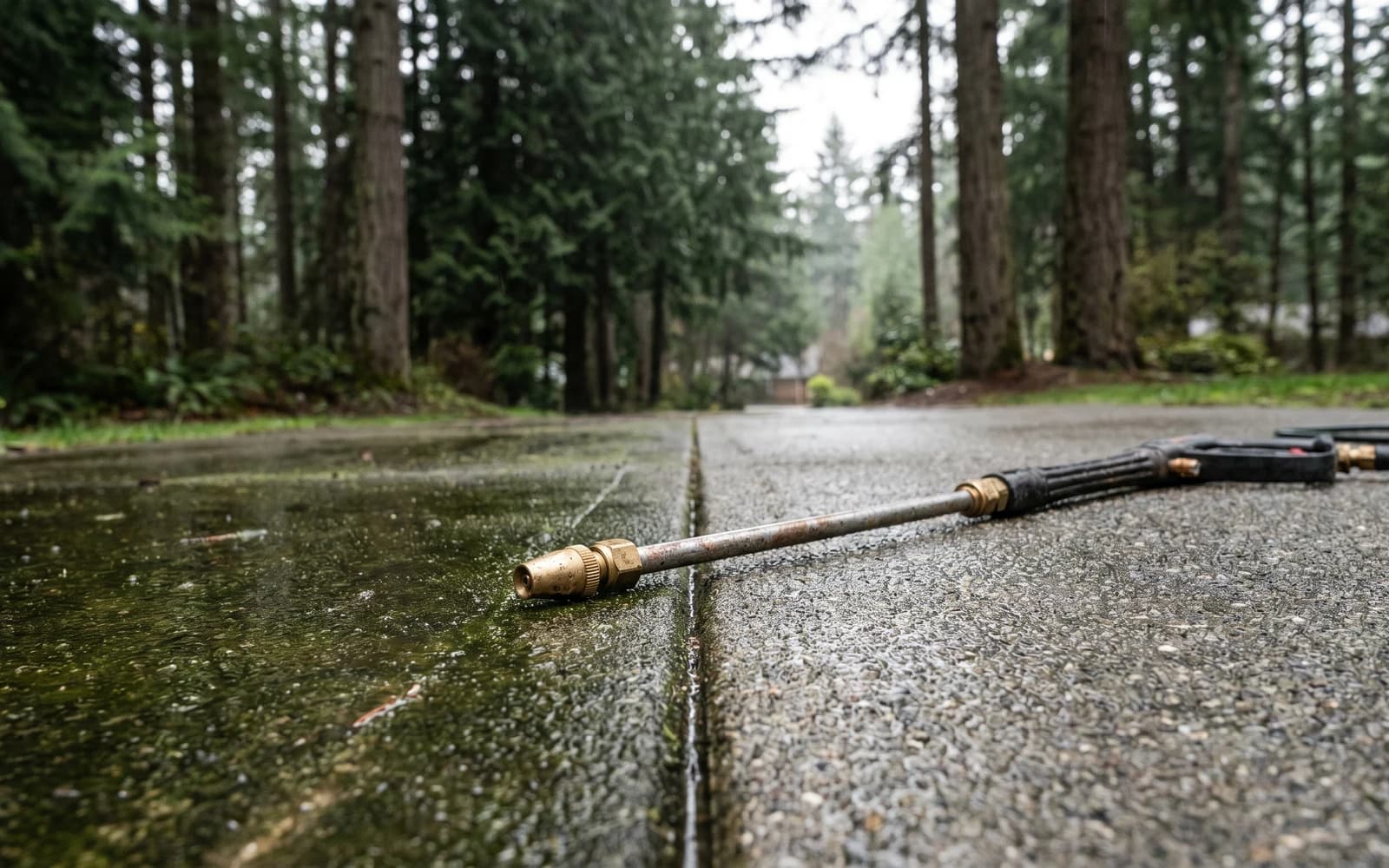
Our climate is very good at growing things you did not plant. The same mild, damp weather that keeps the region green also coats north-facing concrete in moss, darkens siding with algae, and turns a shaded patio slick and black within a season. Left alone it does not just look tired. It holds moisture against the surface, and on walkways and stairs it becomes genuinely dangerous. Regular washing is less about curb appeal than about keeping surfaces sound and safe.
How often is often enough
For most homes here, once or twice a year covers it. A single annual wash suits a sunnier, well-drained lot. Two washes, a spring clean-up to strip the winter's growth and a late-summer refresh, make sense for a shaded property, one under heavy tree cover, or anywhere the north side stays damp. The one rule that does not bend is timing: wash in a dry stretch so the surface can dry out afterward, not during a wet week when it never gets the chance.
If you keep a seasonal rhythm, washing folds neatly into the warm-weather round I lay out in the summer home maintenance checklist. Getting the growth off before fall means the surfaces head into the wet season clean instead of already colonized.
Match the method to the surface
The mistake I see most is treating every surface with the same wand and the same pressure. A driveway and a cedar fence and vinyl siding all want different handling, and using too much pressure does real, lasting damage that the moss never would. Here is the quick version before the detail:
- Concrete and paver driveways, walkways, and patios: full pressure, ideally with a surface-cleaner attachment for an even finish.
- Wood decks and fences: reduced pressure, tip kept moving along the grain, treated as a clean rather than a strip.
- Vinyl, stucco, and fibre-cement siding: soft wash only, meaning low pressure plus a cleaning solution, never high-force water.
Hard surfaces take the pressure
Concrete and paver driveways, walkways, and patios are what people picture when they think pressure washing, and they can genuinely take it. Full pressure with a surface cleaner attachment lifts embedded moss and grime and leaves an even finish without the zebra striping you get from waving a bare wand around.
Wood gets a gentler touch
Decks and fences are softer than they look. Too much pressure furs up the grain, gouges the wood, and leaves marks that show through any finish you put on later. I back the pressure down, keep the tip moving with the grain rather than across it, and treat washing as cleaning, not stripping. If the wood is heading for stain, that ties into my fence and deck services.
Siding needs a soft wash
Siding is the surface people most often damage. Blasting vinyl, stucco, or fibre cement at full pressure can crack it, and worse, it drives water up behind the boards and into the wall assembly, exactly where you never want it. The right approach is a soft wash: low pressure paired with a cleaning solution that kills the algae and mold, then a gentle rinse. The chemistry does the work, not the force.
The slip hazard nobody schedules around
This is the part I wish more people took seriously. Algae on a sloped concrete driveway, a set of front steps, or a shaded walkway turns invisible and treacherous the moment it rains, and our wet months keep it wet for weeks at a stretch. Most of the bad slips I hear about happen on exactly these surfaces in exactly this season. Keeping them clean is not vanity. It is the cheapest fall-prevention you can buy, and it is the first thing I clear on any property with sloped access.
When the wash is prep, give it time to dry
If you are washing a deck or fence as the first step before staining or painting, the drying time is not optional. Wood that looks dry on the surface can hold moisture for a day or more after a wash, and finish applied over damp wood will not bond. Wash, then wait for a genuinely dry surface, then coat. The full sequence for a deck is in spring deck refinishing.