
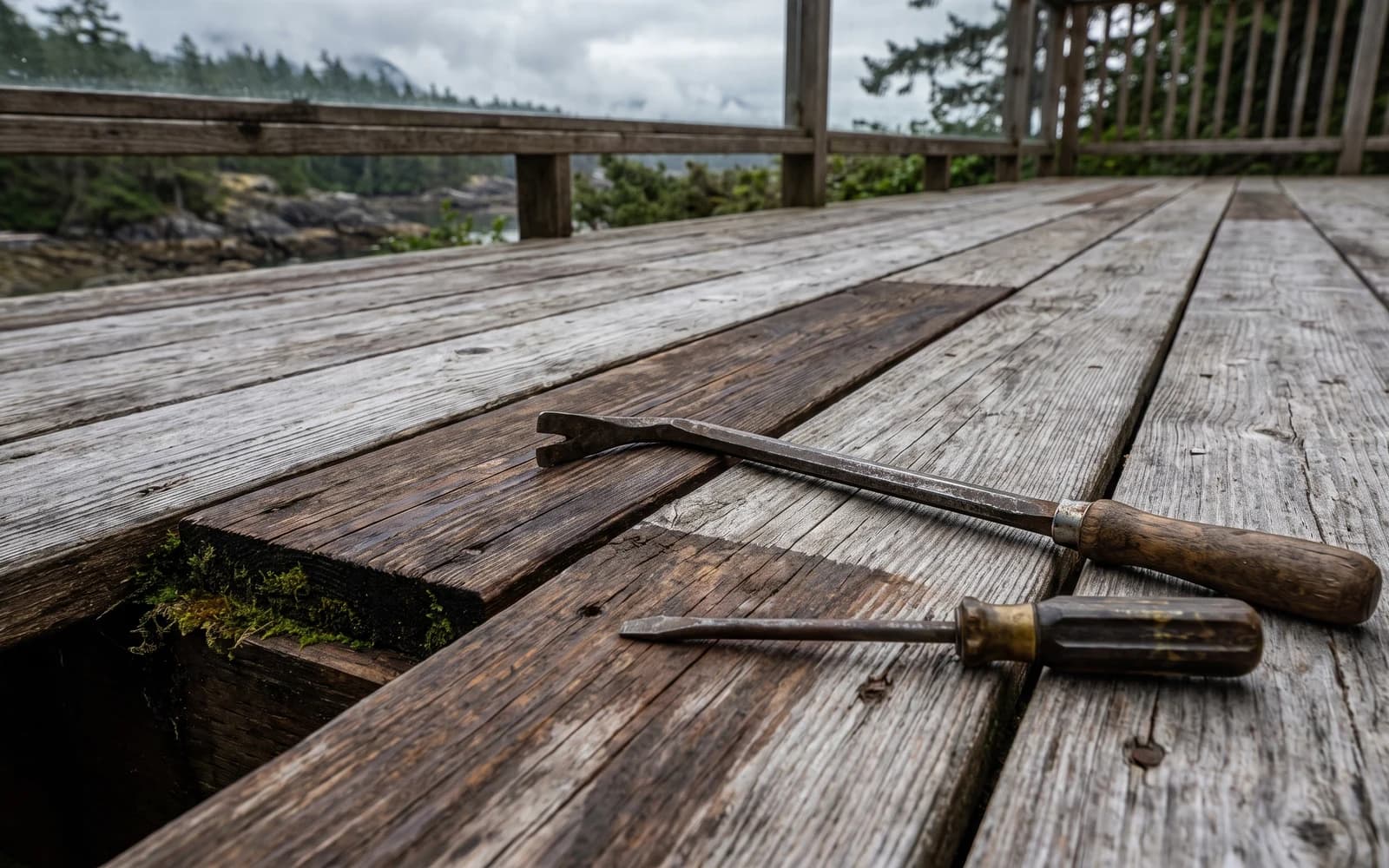
A tired-looking deck and an unsafe deck are not the same thing, and telling them apart is the whole job. Two decks can look identical from the kitchen window while one needs a weekend refinish and the other needs the framing rebuilt. The difference lives underneath, in the structure, so that is always where I start.
Assess the structure before the surface
Before I judge a single board, I look at what holds the deck up: the posts down to the footings, the beams they carry, the joists spanning between, and the ledger board. That ledger is the piece bolted to the house, and it is the most important connection on the entire deck because it carries the load back into the building. If the framing is solid, almost everything above it is fixable. If the framing is compromised, no amount of surface work makes the deck safe, and that changes the conversation completely.
Surface issues mean repair or refinish
When the bones check out, the rest is maintenance. Splintered or greying boards, a railing that has worked loose, chipped stain, popped screws: these are repair-and-refinish problems, not rebuild problems. A few boards can be swapped, fasteners re-set, and the whole surface brought back with a proper wash, sand, and re-stain. If your deck is structurally sound and just looks rough after winter, my guide on spring deck refinishing walks through that seasonal work start to finish.
Structural rot means rebuild, and it is urgent
The picture flips once the framing itself is failing. Soft, spongy joists you can push a tool into, rot spreading through the ledger, posts crumbling at the base, or a guardrail that flexes when you lean on it are not cosmetic. That is a major rebuild and, more to the point, a safety issue you should not keep living on top of. Spending money to refinish a surface sitting on failing framing just buries the real problem under a nice coat of stain.
The wet-coast factors that shorten a deck's life
Our climate attacks decks in a few predictable places, and knowing them tells you where to look:
- Rusted or corroded fasteners, since years of damp weaken the screws and hangers holding the frame together
- Cupped and rotting boards that trap water on top instead of shedding it, speeding the decay
- A shaded underside that never fully dries, keeping the joists and beams damp long after the surface looks fine
- Standing debris and leaves in the gaps, which hold moisture right against the wood
- A ledger with failed flashing, letting water run behind the board and into the framing and the house wall
What moves a deck job from repair to rebuild cost
Even after you know whether the deck is a repair or a rebuild, a few things decide how big the job is. Knowing them ahead of time makes the quote conversation faster and keeps surprises off the invoice:
- How much framing is affected, since one rotted joist is a very different job than a compromised beam or ledger
- Height and access, because a raised second-storey deck means ladder work and safety staging that a ground-level deck does not
- Board material, as pressure-treated, cedar, and composite each carry different cost and prep
- Whether the ledger flashing has to be redone, which pulls the house wall into the scope
- Removal and disposal of failed framing and old decking, including hauling and dump fees
None of that has a flat rate attached, which is why I quote in writing after seeing photos rather than guessing from a description. The point of naming these factors is so you can gather the right pictures the first time and get a number that actually holds.
The takeaway is simple: judge the deck from the frame up, not the surface down. If you want a hand making the call, send photos of the underside, the ledger where it meets the house, and any soft spots through the quote form and I reply in writing. You can see the full scope on the fence and deck services page. The same structure-first logic drives a fence repair vs replacement decision, and for a whole list of aging items, the repair-or-replace decision guide is the framework I lean on.