
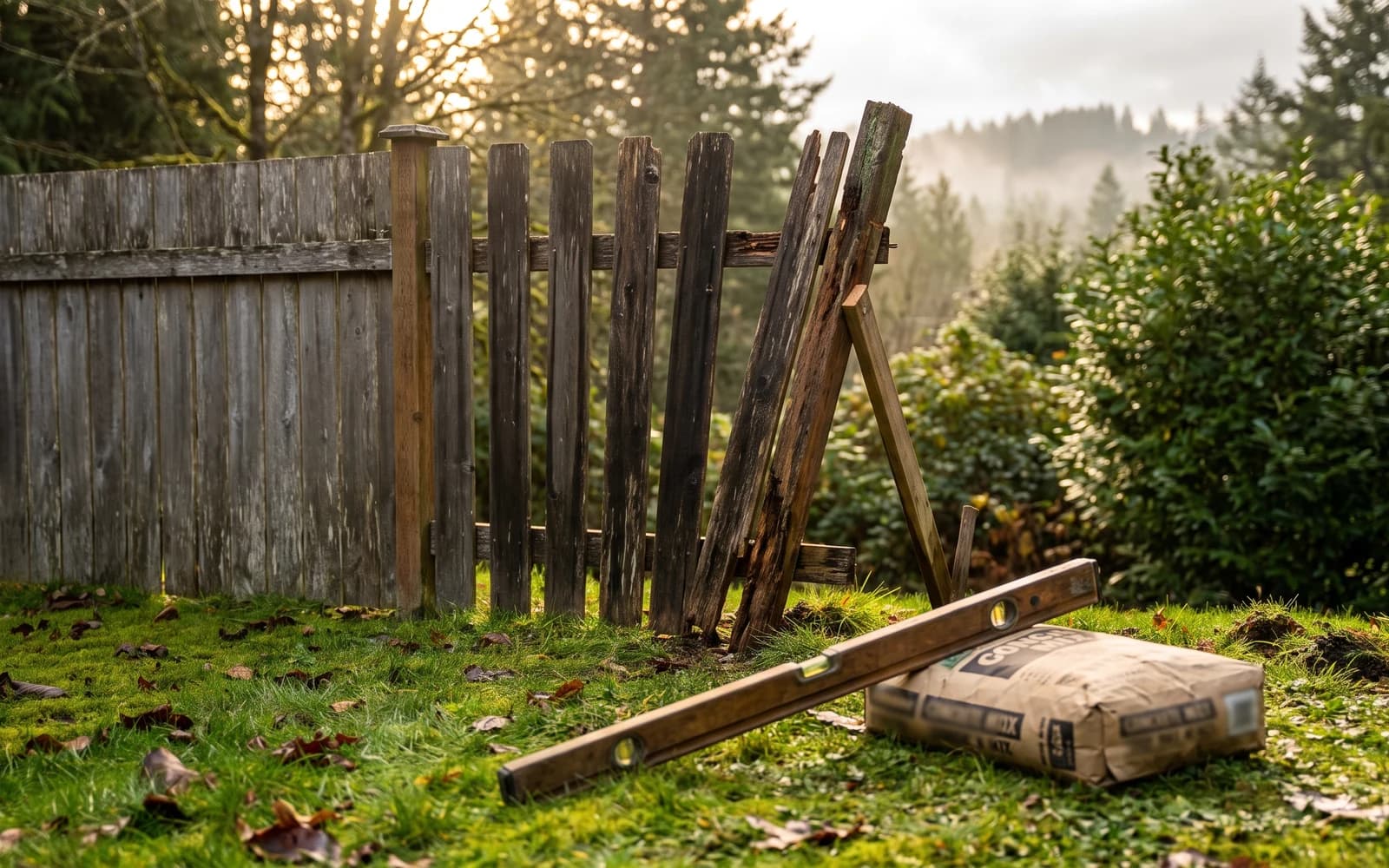
Almost every fence question I get starts with the same worry: is this a patch job or do I have to tear the whole thing out. The good news is that the answer usually comes down to one part of the fence, and you can check it yourself before anyone quotes anything. This guide walks through what to look at and what actually moves the price.
Push on the posts first
The posts are the spine of the fence, so that is where any honest assessment begins. Grab a post and give it a firm push near the top, then look at where it meets the ground. A post that holds firm with clean wood at the base is doing its job, even if the boards hanging off it look tired. A post that wobbles, or that you can sink a screwdriver into right at soil level, has lost its structure and no amount of new boards will fix it. On our coast the failure almost always happens at that soil line, not up in the air where you can see it.
What drives fence repair or replacement cost
- Linear feet of fence, since a short side yard and a full property perimeter are very different jobs
- Number of posts involved, because each post that needs digging out and resetting is real labour
- Whether the posts are rotted at the base or only the pickets and rails have failed
- Cedar versus pressure-treated lumber, which changes both material cost and how the finished fence looks
- Gate rebuilds, which carry hardware and squaring work that a straight run does not
- Removal and disposal of the old fence, including hauling and dump fees
- Sloped ground or tight access down a side yard that limits how equipment and lumber move
- Height and property-line rules, which you should confirm with your municipality before building
When a repair is the right call
If the posts are sound and the problem is cracked pickets, a sagging rail, or a section knocked loose by a windstorm, you are looking at a repair. Swapping boards, re-securing a rail, or resetting one leaning post is faster and far cheaper than a rebuild, and it leaves you with a fence that matches the rest of the run. A lot of fences that homeowners assume are finished just need the failed pieces replaced and the whole line re-squared.
When replacement is the honest answer
Once multiple posts have rotted through at the base, or a whole run leans no matter how you prop it, patching stops making sense. At that point you are paying repair labour again and again for a fence that keeps failing somewhere new. Replacing the run with fresh posts set properly gives you a fence that stands straight for years instead of a season. The same logic that applies to a deck repair or replacement call applies here: fix isolated damage, but replace once the structure itself is gone.
The wet-coast reason posts fail
Cedar is the classic Lower Mainland fence material and it earns its reputation, but our climate is hard on it in one specific spot. Where the wood meets damp soil, cedar greys and slowly rots from constant moisture, while the parts up in the air can still look fine. That is why post condition, not the look of the boards, decides most of these jobs. Keeping the base clear of piled soil and mulch, and washing the fence when it gets grimy, both slow that decay. If you are already thinking about upkeep, our guide on when to pressure wash covers how often that is worth doing.
Whether you land on a repair or a replacement, the path forward is the same. Send photos of the full run and any leaning posts through the quote form, and I reply in writing with a real number and a plan. You can see the scope of what I handle on the fence and deck services page, and if you are weighing a bigger list of aging items around the house, the repair-or-replace decision guide lays out the framework I use.