
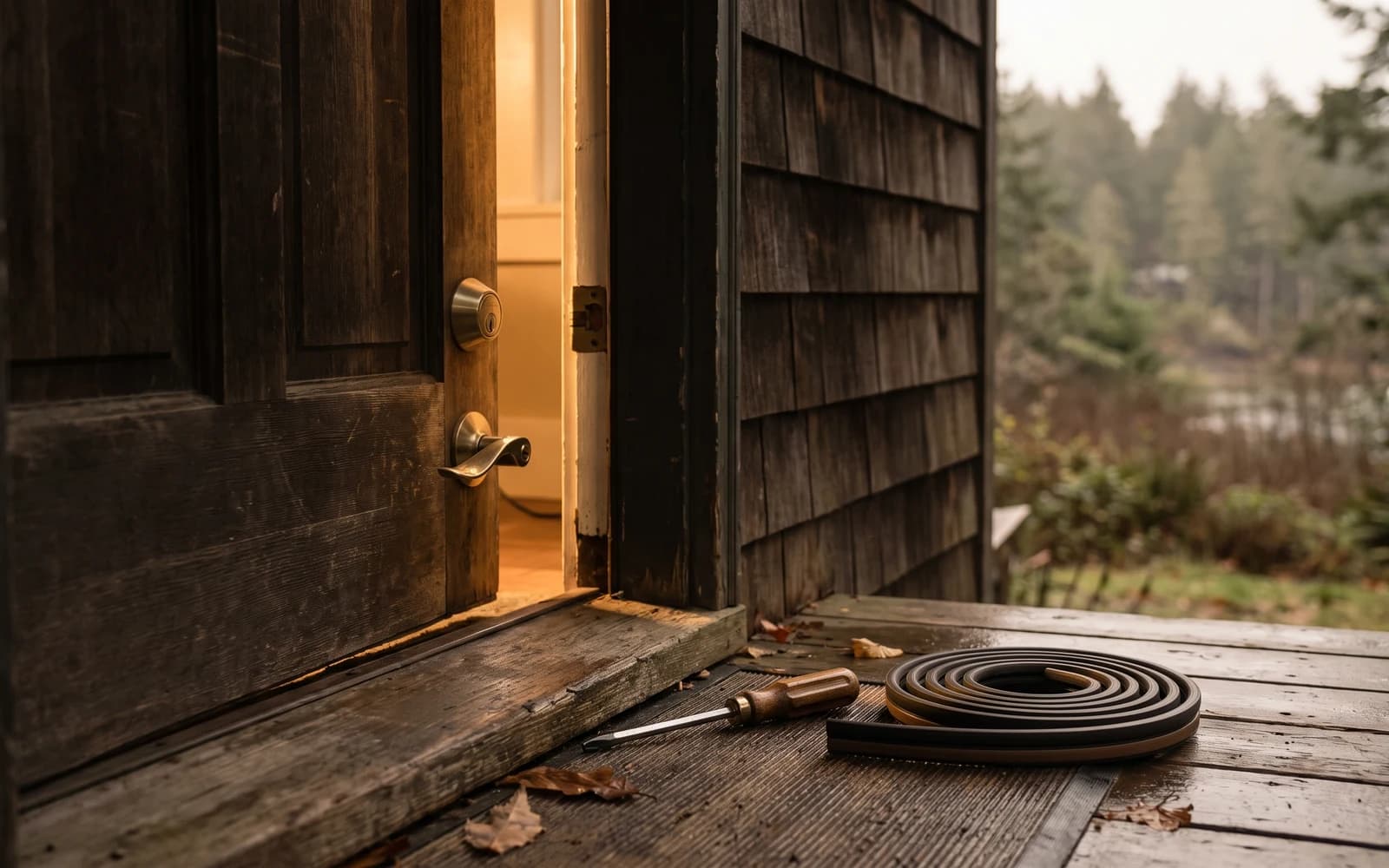
Almost every sticking-door call I go to gets fixed with a screwdriver, not a saw. The instinct when a door starts dragging is to shave the edge down, and it is almost always the wrong first move. Nine times out of ten the door itself is fine and something small has shifted around it. Work through the causes in order and you will usually solve it in minutes, without taking anything permanent off the door.
Why doors start to stick
There are four usual reasons, and they often overlap. Knowing which one you are dealing with tells you which fix to reach for.
- Seasonal humidity. Wood doors and frames swell as they take on moisture through the damp months, then shrink again when it dries out. A door that binds every winter and swings free every summer is doing exactly this, and it is the most common cause on the coast.
- House settling. Over years, a frame can rack slightly out of square as the house moves, so the door no longer matches its opening.
- Loose hinge screws. This is the sneaky one. As the top hinge screws loosen, the whole door sags on that corner and starts catching on the latch side or the floor. It looks like the door grew, but really it dropped.
- Paint build-up. Coat after coat of paint on the edges and the stop can thicken enough to make a once-fine door bind in its frame.
The fixes, easiest first
The order here matters, because each step is cheaper and less permanent than the next. Do not skip ahead to sanding when tightening a screw would have done it.
Start with the hinges. Open the door and tighten every hinge screw, especially the top hinge. If the screws just spin without biting, the wood behind them is stripped, and the real fix is to swap two or three of them for longer screws that reach past the jamb and bite into the framing behind it. That single trick pulls a sagging door back up into square and cures a surprising share of sticking doors on its own.
If the door is catching at the latch rather than dragging, look at the strike plate, the metal plate the bolt lands in. A small adjustment, filing the opening slightly or shifting the plate a couple of millimetres, realigns the latch without touching the door at all. Only when the door genuinely no longer fits the opening, usually from real swelling or settling, do I sand or plane the binding edge, and even then just the high spot, sealed and repainted afterward so it does not drink up moisture. That is the last resort, not the first.
Locks and deadbolts that jam
A stiff or jamming lock usually comes down to one of three things. The first is alignment: if the deadbolt does not slide smoothly into the strike, the bolt and the hole have drifted out of line, often for the same sag or swelling reason a door sticks. Fixing the door's alignment frequently fixes the lock in the same visit.
The second is a dry cylinder. A key that turns stiffly or sticks wants lubrication, but not oil. Household oil and WD-40 attract grit and gum a lock up over time. Use a dry graphite or a proper dry-film lubricant made for locks instead. The third is simply worn hardware: a builder-grade lockset that has done a decade of daily use may just be at the end of its life, and no amount of adjustment brings it back. If you are replacing anyway, it can be a good moment to consider an upgrade, which I cover in smart lock installation.
Weatherstripping and drafts
While you are working on an exterior door, check the weatherstripping around it. Compressed, torn, or hardened seals let heat out and drafts and rain in, and they are a quick, cheap swap that pays back all winter. This is a natural item to fold into the warm-weather round in my summer home maintenance checklist, while the adhesive still cures fast in dry air.
Adjust or replace
Most sticking doors and jamming locks are adjustment jobs, not replacement jobs, and that is the good news for your budget. Replacement earns its place when the door itself is rotted, delaminating, or badly out of square, when the lockset is worn past adjustment, or when a functional door is simply not sealing or securing the way an exterior door needs to. A hung, aligned, and weathertight door is worth getting right. Adjustments live under my general repairs, and a new door or lockset hung and fitted is assembly and mounting work.