
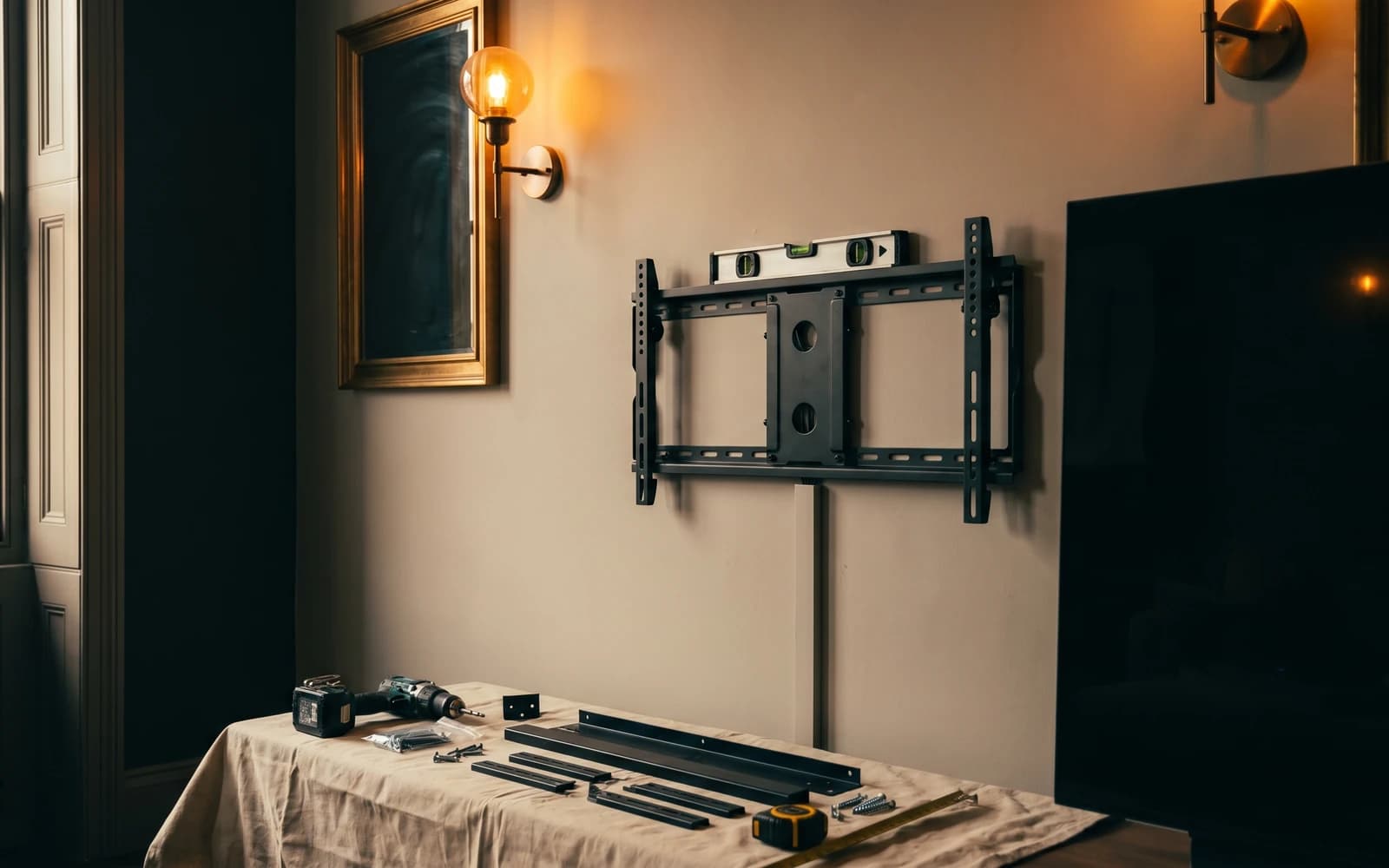
TV mounting looks simple until the screen sits crooked, the cables hang loose, or the mount misses proper structure. Here is what separates a clean install from one you notice for the wrong reasons.
1. Two studs, every time
A TV mount should anchor into proper structure, usually two studs for larger screens. Toggle bolts have their place, but they are not a casual substitute for structure on a heavy mount.
2. Stud finder verified, not assumed
Stud finders give a rough location. A small pilot hole confirms the structure before the mount goes up. That extra check is what keeps the install from drifting off-stud.
3. Level matters more than you think
A slightly crooked TV may not bother you on day one, but it becomes obvious every time a straight line appears on screen. Brody levels the mount before any screws go in, then checks the TV after it is seated.
4. In-wall cable hide
Cables snaking down the wall ruin the install. An in-wall cable kit keeps HDMI and power paths organized, cleaner, and safer than improvised cord runs.
5. Mount choice matters
Fixed mounts are cheapest but you can't tilt the screen for glare. Tilting mounts are the workhorse. Articulating mounts pull out from the wall for corner installs or rooms where the seating angles change. Brody confirms which one fits your room before recommending.
6. Anti-loosening lock washers
Even a stud-anchored mount depends on the right washers and fasteners. Small hardware details help the mount stay tight over time.
7. Above-fireplace heat consideration
Mounting a TV above a wood-burning fireplace is risky. Above a gas fireplace with a heat shield is fine. Above an electric fireplace is fine. Brody confirms the install location before drilling and won't mount somewhere unsafe even if asked.