
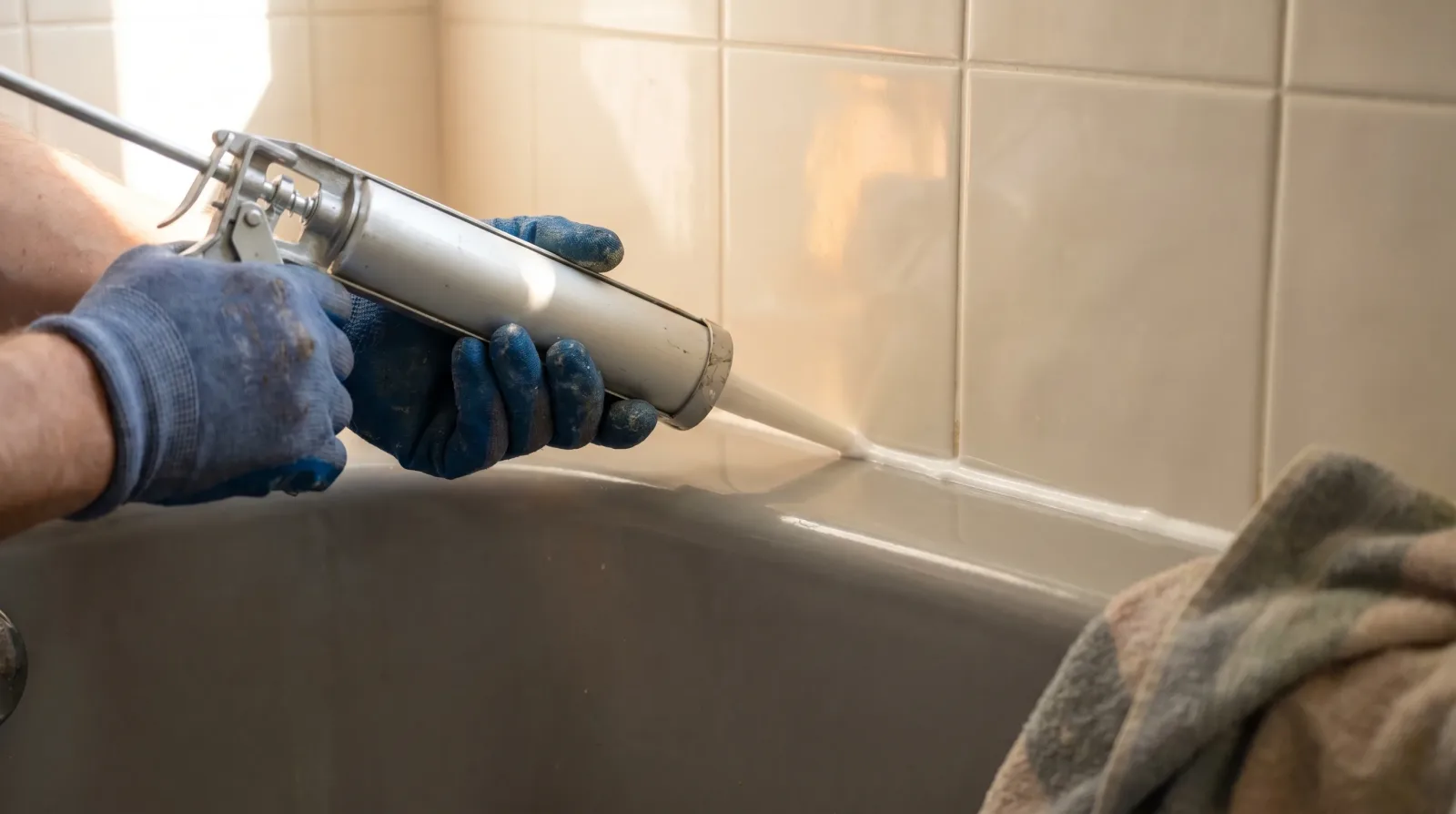
Caulk failure is the silent disaster of BC bathrooms. The visible problem is yellow or cracked caulk around the tub, and most homeowners assume it is cosmetic. The hidden problem is water sneaking past the failed seal, soaking the drywall, swelling the subfloor, and growing mold inside the wall cavity for months before any damage shows from the outside. By the time the bathroom looks bad, the wall behind it might be a tear-out repair instead of a caulk job.
The good news: recaulking is one of the highest-leverage prevention jobs in any home. The bad news: it is one of the easiest DIY tasks to do badly. This guide covers both.
When DIY caulk replacement is fine
If the existing caulk is just yellowed or stained but the substrate underneath is solid, recaulking is a perfectly DIY-able job for an afternoon. The skill is in the prep, not the application. Cut the old caulk out completely with a utility knife and a caulk-removal tool. Vacuum and wipe the joint with isopropyl alcohol. Let it dry fully. Lay painter's tape along both sides of the joint to define a clean line. Apply a kitchen-and-bath silicone (not latex, not 'silicone-blend') in a smooth bead. Tool the bead with a wet finger or a caulk-finishing tool. Pull the tape immediately while the silicone is still wet. Let it cure 24 hours before water hits it.
When you should call instead
Recaulking is a band-aid on a problem that has already happened, not a fix for ongoing damage. There are specific conditions where the caulk is the symptom and the real repair is bigger.
- The drywall behind the tile feels soft when pressed. Water has already gotten through.
- The grout between tiles is cracked or missing in the wet zone, not just the caulk joint.
- The tub or shower base flexes underfoot. The subfloor may already be compromised.
- There is a musty smell when the bathroom is closed up. Mold is likely already growing somewhere.
- You see staining on the ceiling of the room directly below.
- The caulk has been replaced before and failed again within a year.
Why the wrong caulk causes the same problem twice
Latex caulk is cheaper and easier to apply but breaks down in the constant wet-dry cycle of a tub or shower. It works for trim and baseboards, not for the bath. 'Silicone-blend' caulk is a marketing label that often means mostly latex. The right material is 100% silicone, sold specifically as kitchen-and-bath caulk. It is harder to tool clean, but it lasts five times longer in a wet environment. Brody uses GE Sanitary or DAP Kwik Seal Ultra by default.
How long does a proper recaulk take?
Brody allocates about 90 minutes per tub or shower for a thorough recaulk: removal of old caulk, full prep, tape, silicone application, tooling, tape pull, and cleanup. That includes the caulk for the tub-to-floor joint, the tub-to-tile joints on three sides, and around any fixtures or trim plates. The 24-hour cure window means the bathroom is usable for everything except a shower until the next morning.