
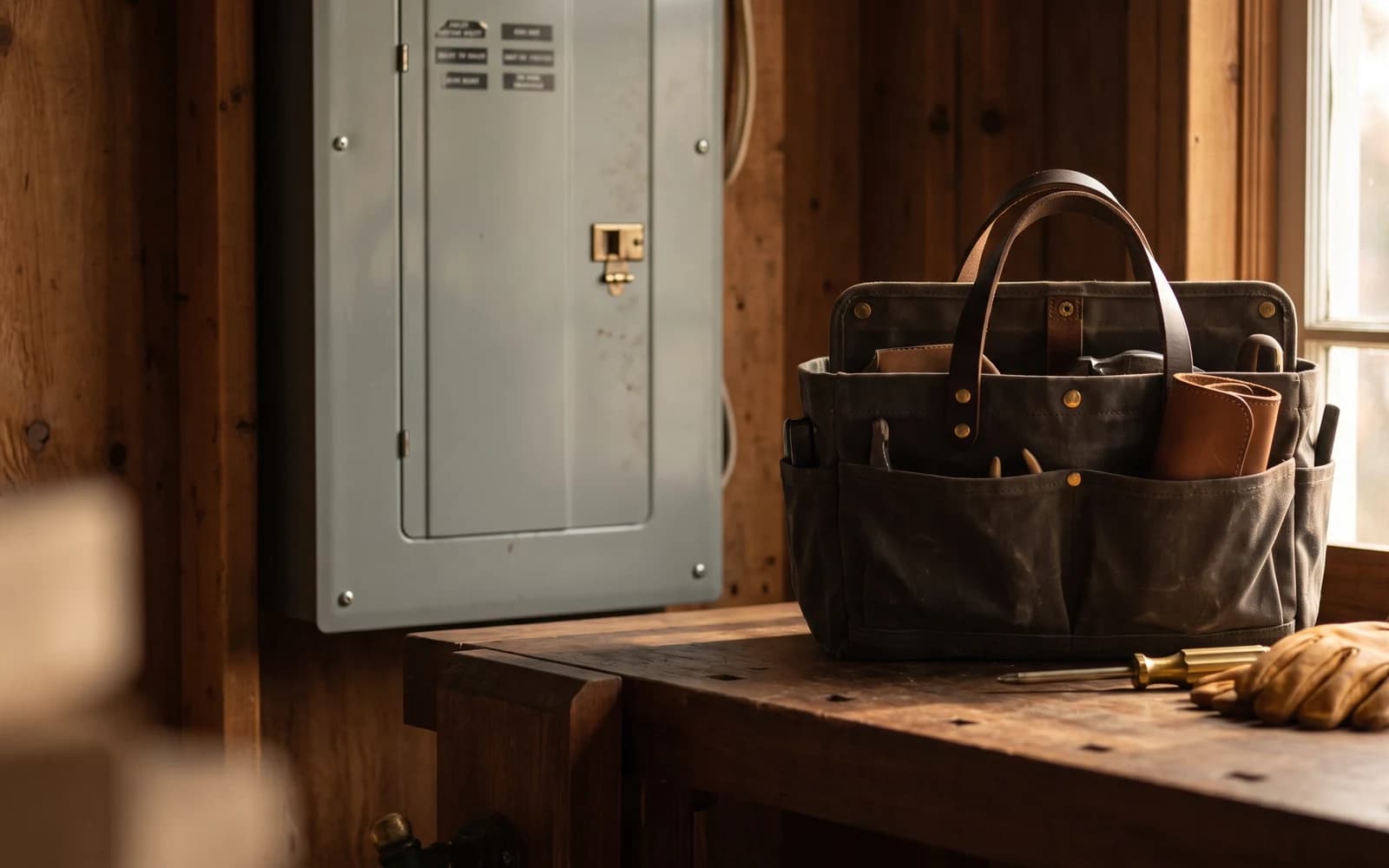
One of the most common questions I get before a job is a fair one: are you actually allowed to do this? The honest answer in British Columbia is that a handyman can take on a large amount of home repair without any trade licence at all, but there are three areas the law puts firmly off-limits. Knowing where that boundary sits protects you from paying for work that later has to be torn out, and it is the reason I turn certain jobs down instead of stretching my scope to fit them.
What a handyman can legally do in BC
There is no general handyman licence in BC, and there does not need to be. Minor repair and maintenance work is not a regulated trade, so a competent, insured handyman can legally take on the broad middle of home repair. That covers most of what a homeowner quietly accumulates on a list over the years. My page on all handyman services maps the full scope, but the categories below are the everyday core.
- Drywall patching, taping, and texture matching
- Interior and exterior painting, caulking, and surface prep
- Tile repair, backsplashes, and grout work
- Door alignment, locksets, hardware, and weather stripping
- Fixture and hardware swaps within homeowner-allowed scope
- Furniture assembly, TV mounting, and shelving
- Carpentry repairs, trim, fences, gates, and deck maintenance
The three regulated trades a handyman must not touch
BC treats electrical, plumbing, and gas as regulated trades because the failure modes are severe: fire, flooding, and carbon monoxide. The Province requires certification for this work, and no amount of general skill substitutes for the licence behind it. This is the hard boundary, and a handyman who offers to blur it is a warning sign, not a bargain.
Electrical
Electrical work in BC is governed by Technical Safety BC, and it requires a certified, licensed electrician. No one may legally perform electrical work without that certification. There is a narrow band of permitted work a homeowner can do on their own home under permit, but a handyman cannot legally do that work on your behalf. So I handle simple like-for-like swaps only where they clearly fall inside homeowner-allowed scope, and I send anything involving circuits, panels, or new wiring to a licensed electrician. My electrical work page spells out exactly where I stop.
Plumbing
Plumbing is a certified trade in BC, and the regulated work requires a Certificate of Qualification. Swapping a faucet or a toilet is generally fine, but anything that opens up the supply or drainage system, relocates lines, or ties into a gas-fired water heater belongs to a licensed plumber. The risk with plumbing is rarely just the obvious leak; it is the slow one behind a wall that surfaces as a much bigger repair bill months later.
Gas
Gas is licensed work with no grey area. Connecting a gas range, a dryer, a fireplace, or a water heater requires a licensed gas fitter. I do not touch gas connections, and no handyman legally should.
Permits are separate from licensing
Even work that sits squarely in handyman scope can trigger a permit depending on where you live. Permit rules are set locally, so what needs a permit in one Lower Mainland city may not in the next. Structural changes, certain exterior work, and anything involving the three regulated trades are the usual triggers. I flag anything that looks like it needs a permit before I start, not after, so nobody gets surprised by an inspection.
Why an honest handyman tells you up front
I explain all of this before a job rather than after because scope honesty is the entire value of hiring the right trade. If I stretched a job into electrical or gas work I am not licensed for, you would be the one left holding the risk: failed inspections, voided insurance, and the cost of paying a licensed trade to redo it properly. Turning that work down and pointing you to the right specialist is not me being difficult; it is the service itself. For the broader question of which trade fits which job, my guide on handyman vs general contractor walks the boundary, and if you are still deciding whether to hire out at all, DIY vs handyman covers that call.