
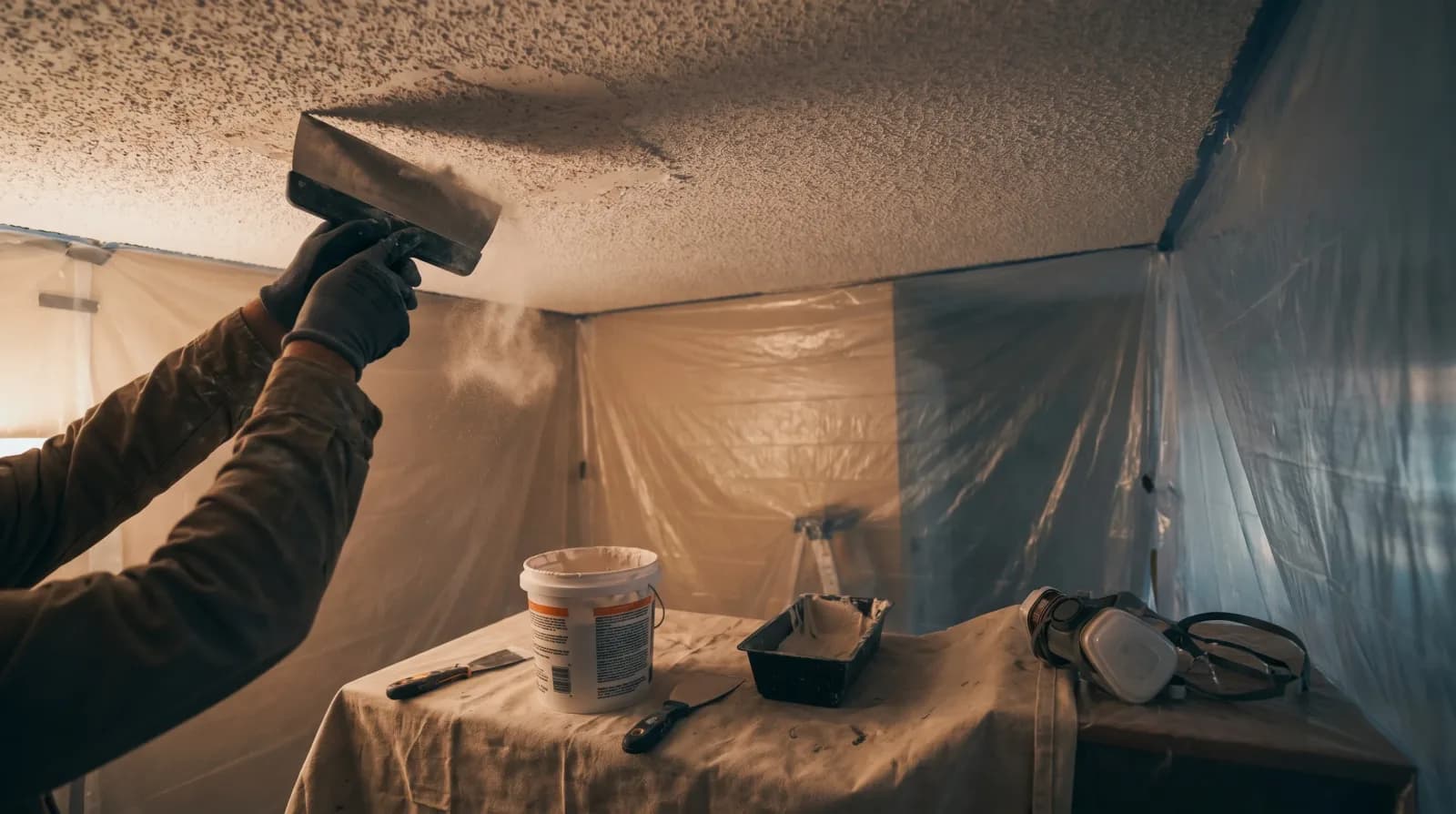
Popcorn ceilings, also called acoustic or stipple ceilings, were the standard in BC homes built between roughly 1960 and 1990. They hide imperfections in the drywall finish, dampen sound between floors, and were extremely fast for builders to spray on. They also collect dust, yellow with age, and read as instantly outdated to anyone walking through your home. Removing them is one of the highest-impact aesthetic upgrades in any older Lower Mainland house, but the project has more nuance than HGTV shows let on.
1. Test for asbestos before you start
This is the non-negotiable first step in any BC home built before 1990. Popcorn texture from that era often contained chrysotile asbestos as a binder. Disturbing the texture without proper containment releases asbestos fibres into the air, where they can settle anywhere in the house. The test is simple: a small sample, sent to a certified lab, results back in 3 to 5 business days for around $40 to $80. If the test comes back positive, the removal must be done by a certified asbestos abatement contractor under WorkSafeBC rules. There is no DIY path on a positive test.
2. The two real removal methods
Once a clean asbestos test is in hand, the actual removal has two viable approaches. Each has a place, and the choice depends on your tolerance for mess versus cost.
Wet scrape
The texture is misted with water (sometimes mixed with a little dish soap) until it softens, then scraped off the drywall with a wide putty knife. This is the messiest method, with wet popcorn material falling onto plastic sheeting throughout the room, but it is the most cost-effective. The cleanup is the largest part of the job. Best for empty rooms and bare floors, not occupied homes mid-renovation.
Skim coat over
Instead of removing the texture, the entire ceiling is skim-coated with two or three thin layers of joint compound, sanded smooth between coats, and finished flat. This is faster, much less messy, and avoids the scraping step entirely. It also raises the ceiling surface by about 1/8 inch, which sometimes affects crown moulding or light fixture trim. Best for occupied homes, accessible ceilings, and homeowners who want a smooth finish without the demolition phase.
3. The drywall underneath might need attention
Popcorn texture was often used to hide rough drywall finishing on the ceiling, because no one would ever see it under the texture. Once the texture is removed, the underlying ceiling can show seam lines, screw pops, and the original drywall finishing quality. Skim-coat-over avoids this entirely. Wet-scrape almost always reveals some level of remediation work to take the bare drywall to a paint-ready finish. Brody flags this in the quote so the cost includes the finish work, not just the removal.
4. Painting the ceiling after
A smooth ceiling shows imperfections that texture used to hide, so the paint choice matters more after a popcorn removal than before. A flat ceiling paint, in a true white, sprayed in two coats, is the cleanest finished look. Roller marks on a smooth ceiling are visible for the life of the room. Brody sprays new ceiling finishes by default unless the room is small enough that the masking time outweighs the spray benefit.
5. Cost drivers
- Square footage of ceiling, both rooms and total levels.
- Wet-scrape vs skim-coat-over (wet scrape is messier but often faster on simple ceilings).
- Condition of the underlying drywall after removal.
- Whether the ceiling has stains, water spots, or repairs that need to be addressed before finish.
- Whether the room is occupied or empty (occupied rooms need more containment).
- Sprayed vs rolled paint finish.